

Your questions
The questions people actually ask.
What a preservation breeder is, what health testing means, how a placement works and what living with a Boston Terrier is like. Where an answer depends on a particular litter, it says so.
Choosing a breeder
What is a preservation breeder?
A preservation breeder works to keep a breed healthy and recognisably itself for the next generation, rather than producing puppies to meet demand. Decisions are made a litter at a time, with health screening, temperament and the breed standard weighed together. It usually means fewer litters, not more.
How is that different from a backyard breeder or a commercial kennel?
The difference shows up in what is documented and what is refused. A preservation breeder health tests before breeding, keeps records you can check, shows or otherwise has their dogs independently assessed, places carefully, and stays available for the life of the dog. Volume is the opposite of the goal.
Why are there not always puppies available?
Because the plan follows the dogs rather than a calendar. A pairing happens when the individual dogs are ready and the match makes sense; sometimes a year passes without a litter. An empty Upcoming litters page means exactly that, not that something is being held back.
Can we visit and meet the parents?
Meeting the dogs matters, and so does the health of a litter — newborn puppies are vulnerable, so timing and biosecurity shape when visits make sense. Ask Dennis what works for a particular litter.
Health and testing
What health testing should a Boston Terrier breeder be doing?
For Boston Terriers the Canine Health Information Center recommends a published eye examination, hearing (BAER) testing, and patella evaluation, with further screening such as cardiac and juvenile hereditary cataract commonly added. The current requirements are published by the OFA and are the thing to check, since they change.
What are OFA and CHIC?
The Orthopedic Foundation for Animals keeps a public database of health results, and CHIC is a number issued when a dog has completed the screening its breed recommends and the results are published. A CHIC number says the testing was done and made public — it does not by itself say every result was normal, which is why the individual results are worth reading.
Are Boston Terriers a healthy breed?
They are a short-faced breed, which brings real considerations around breathing, heat and anaesthesia, alongside the eye and patella issues screening looks for. A well-bred Boston should breathe easily and move freely. Any specific concern belongs with your own veterinarian.
Where can we see the health records for these dogs?
The health and care page sets out what is screened and why, and each dog's profile carries the findings recorded for that dog, with certificates where they have been supplied. Where a record does not exist, the page says so rather than implying one.
Puppies and placement
Is there a waiting list?
No. A puppy is placed on the fit between that particular puppy and that particular home, not on the order enquiries arrived in. Writing early does not reserve anything, and an enquiry sent today is not behind one sent last year. What helps is telling Dennis plainly about your household and what you are hoping for, so he can recognise the right match when a litter arrives.
How many families enquire?
Far more each year than there are puppies born here, so most enquiries — including thoughtful ones from good homes — do not end with a puppy. The litter archive celebrates past generations and is not a list of puppies seeking homes.
How does a placement work?
It starts with a conversation rather than a form. You tell Dennis about your household and what you are looking for; he talks about the dogs, the pairing and what to expect. If there looks to be a fit, a formal application follows.
What does a puppy cost?
More than most. Our puppies sit at the upper end of the breed, and that is deliberate. The price reflects health testing on both parents and the generations behind them, selection for temperament as much as type, and puppies raised in the house rather than a kennel. The health results are published on this site, so you can see what stands behind it. We do not list a figure here, because the right conversation starts with the dog and the household rather than the number. We would rather be plain about it than have it come as a surprise later: these are not inexpensive puppies, and they are not meant to be. If that sits comfortably alongside what you are looking for, we would be glad to hear from you.
How can we stay informed about future litters?
Follow VanGogh Bostons on Facebook for updates from Dennis. If you would like to introduce your family, you are welcome to get in touch. Plans depend on the dogs and the timing of each pairing.
Can we ask for a particular sex, colour or markings?
You can say what you would prefer, and it is worth saying. Matching a particular puppy to a particular home weighs temperament and household first, so preferences are part of the conversation rather than the whole of it.
When do puppies go home?
Puppies need time with their dam and littermates for normal social development, and most responsible breeders place at a minimum of eight weeks, with longer common. Dennis will tell you the timing for a given litter.
Are puppies registered?
Registration, paperwork and any conditions attached to a placement are set out in writing before you commit. Read the agreement and ask about anything you do not understand, including any breeding or neutering provisions.
Do you ship puppies?
Ask Dennis. Many preservation breeders prefer to meet the people taking a puppy rather than send one unaccompanied, and air travel carries particular risk for a short-faced breed.
What support is available after coming home?
Ongoing support is part of Dennis's approach to placing a puppy. Discuss how to stay in touch, what care information you will receive and the questions you may have as your Boston settles in.
Living with a Boston Terrier
Are Boston Terriers good with children and other animals?
The breed is known for being companionable and people-oriented, which is much of its appeal. Temperament still varies dog to dog, and any dog and child need supervision and sensible introductions.
How much exercise do they need?
Daily walks and play suit most Bostons; they are companions rather than endurance athletes. Watch the heat — a short-faced dog cools itself far less efficiently, so exercise in the cool part of the day in summer.
Do they shed, and what grooming do they need?
The short coat sheds modestly and needs little more than regular brushing. The face wrinkles, ears, nails and teeth are the parts that want routine attention.
How do they handle Alberta winters?
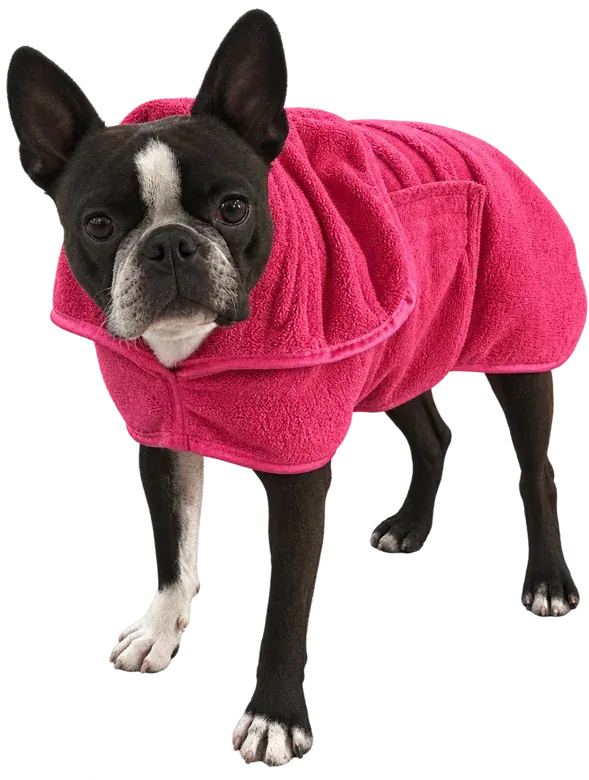
Not well without help. A short coat and a short face mean a coat for cold walks, shorter outings in deep cold, and care with ice melt on the paws.
Showing and pedigrees
What do CH and GCH mean?
Champion and Grand Champion are conformation titles earned by placing under a number of different judges. They record that independent judges, repeatedly, found the dog a good representative of the breed standard.
What does ROM mean?
Register of Merit. Where a championship is won by one dog in the ring, ROM is awarded for what a dog produces: a breed club recognises a sire or dam whose offspring have gone on to earn titles of their own. It is a breed club award rather than a kennel club one, so the exact requirements are set by the club and differ between clubs and countries. Jean-Luc and Amey both hold it.
Why does showing matter if we only want a pet?
Showing is an outside opinion on structure and temperament, gathered from people with no stake in the answer. It is one input among health testing and everyday behaviour, not the whole picture — but a breeder who shows is being assessed rather than self-assessing.
Can we see the pedigree before committing?
Yes. Each dog's profile lists its recorded sire and dam, the legacy page connects the generations, and the breed archive is linked for the fuller record.
General information about the breed, not veterinary advice. For your own dog, talk to your veterinarian; for a particular litter, talk to Dennis.
Still wondering about something else?
Nothing here replaces a conversation. If your question is about a particular dog, a particular litter or your own household, ask it directly.
Every answer has a pedigree behind it.
The litters, the lines and the dogs these answers come from.
See the legacy